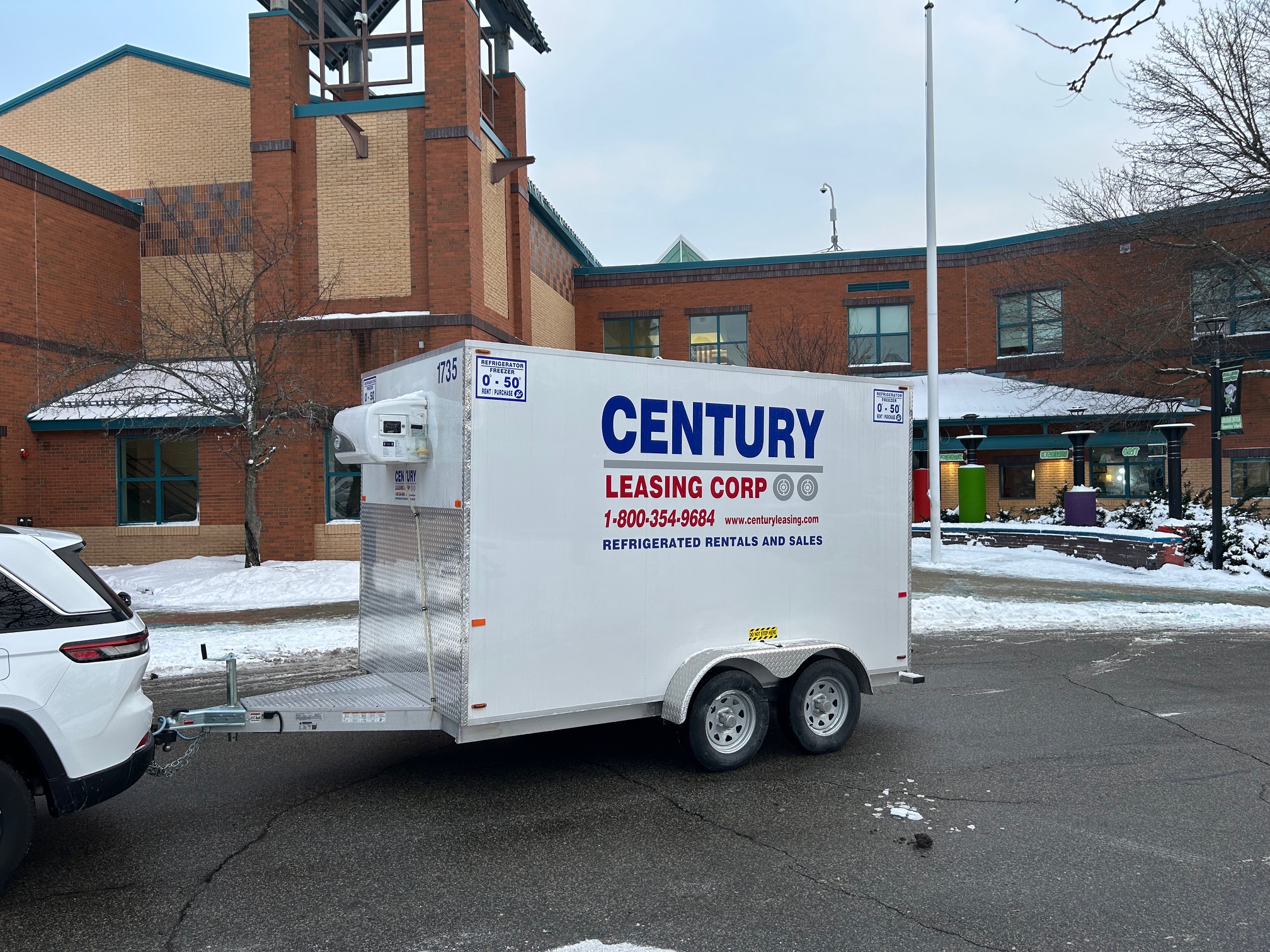
Emergency Cold Storage for Schools in New England | Walk-In Cooler Failure
Emergency cold storage for schools is critical when a walk-in cooler or freezer breaks down. A school walk-in cooler failure can quickly put food inventory at risk and disrupt daily meal service. Mobile refrigerated trailers and refrigerated containers provide temporary refrigeration for schools, allowing cafeterias to safely store food and continue operations during equipment breakdowns.
Unplanned refrigeration failures due to aging infrastructure, equipment issues, or power outages immediately threaten food safety and meal service continuity. Century Leasing’s portable units provide immediate, walk-in cold storage delivered to schools and campuses throughout New England.
These units plug into a standard 110V outlet, maintain temperatures from 0°F to 50°F, and can be placed directly outside school kitchens for fast access.
Food service directors and facilities managers across Massachusetts, New Hampshire, Maine, Rhode Island, Connecticut, and Vermont rely on temporary refrigeration for schools to protect inventory, maintain USDA compliance, and keep students fed when walk-in coolers go offline.
When Schools Need Emergency Cold Storage
Schools most often need emergency cold storage when walk-in refrigeration systems fail, lose power, or cannot maintain safe temperatures. This is especially common in older school buildings throughout southern New Hampshire, central Massachusetts, and coastal Maine, where aging refrigeration systems are still in use.
Common scenarios include:
- Walk-in cooler breakdowns or freezer seizes up
- Power outages or electrical disruptions
- Temperature fluctuations causing unsafe storage
- Large USDA or bulk food deliveries exceeding storage space
- Kitchen renovations or equipment replacement
- Summer meal programs or extended service periods
- Severe weather emergencies
School meal programs must follow USDA Nutrition Standards for School Meals, including proper temperature control for perishable foods and required meal components such as fruits and vegetables.
When temperatures rise above safe thresholds, food can become unsafe within hours — making emergency backup cooling essential.
Temporary Refrigeration for Schools: Fast Backup Cooling for Cafeterias
Temporary refrigeration for schools provides immediate backup cooling when a walk-in cooler or freezer is down. Refrigerated trailers and containers are delivered directly to the school and placed close to the kitchen for quick access.
This allows school cafeterias to:
- Transfer food quickly from failed walk-in units
- Prevent spoilage and inventory loss
- Maintain food safety compliance
- Continue meal service without disruption
Facilities teams can keep operations running while HVAC contractors diagnose and repair the issue.
Emergency Cold Storage for Schools Using Mobile Refrigerated Trailers
A mobile refrigerated trailer for a school cafeteria functions as a temporary walk-in cooler or freezer on-site.
Century Leasing’s trailers and containers are ideal for school environments:
- Maintain precise temperatures from 0°F–50°F
- Plug into standard 110V power — no generator required
- Operate quietly with no fumes near school buildings or playgrounds
- Fit into tight service areas, loading docks, or narrow driveways
- Allow easy loading of carts, racks, and bulk inventory
For busy cafeterias, this means staff can continue meal prep and service without changing workflows — even during an emergency. These units plug into a standard 110V power outlet (the same outlet you plug a microwave or toaster into), making them easy to deploy on school campuses without generators. Learn more about 110V plug-in refrigerated trailers and why they’re ideal for schools.
How Emergency Cold Storage for Schools Supports Food Safety Compliance
Maintaining safe food temperatures during a refrigeration failure is essential for passing inspections and protecting student health.
According to USDA food safety guidance, improper temperature control significantly increases the risk of foodborne illness in institutional meal programs.
Mobile refrigerated trailers provide:
- Consistent temperature control from 0°F–50°F
- Safe storage for dairy, produce, proteins, and frozen foods
- Support for compliance during inspections and audits
- Reduced risk of spoilage and food safety violations
Temporary refrigeration is not just a convenience — it is a critical compliance tool.
What to Look for in a Temporary Freezer or Cooler for Schools
Not all temporary refrigeration is designed for school or institutional use.
A school-ready solution should include:
-
- Commercial-grade cooling systems
- Digital temperature monitoring
- 110V power compatibility
- Secure, lockable doors
- Capacity for pallets and bulk deliveries
- Clean, food-safe interiors
- Fast delivery and setup
Schools may also use walk-in refrigerated containers for additional storage during extended outages.
Emergency Backup Cooling: What to Do When a Walk-In Fails
If a school walk-in cooler or freezer fails, immediate action is required.
- Stop opening the failed unit to preserve cold air
- Document temperatures for food safety records
- Isolate at-risk inventory
- Call for emergency cold storage
- Transfer food to temporary refrigeration immediately
- Resume meal service with minimal disruption
Schools that prepare for these situations respond faster and reduce food loss. For a detailed step-by-step response, see our guide on what to do when a freezer breaks down.
Planning Ahead with Emergency Cold Storage for Schools
Many schools use temporary refrigeration proactively to avoid emergency situations.
Common planned uses include:
- Backup during walk-in repairs or replacement
- Overflow storage during large deliveries
- Summer meal program support
- Coverage for aging refrigeration systems
- Seasonal high-volume demand
Planning ahead reduces risk and prevents last-minute disruptions.
Why Schools Choose Century Leasing for Emergency Cold Storage
Century Leasing has supported schools across New England since 1969. Facilities managers and food service directors rely on our team for fast response times and dependable service when refrigeration issues arise.
- Rapid delivery for emergency situations
- 110V electric units that fit in tight spaces and plug into a standard outlet
- Flexible rental terms
- Experience with schools and institutional kitchens
- Responsive customer support when timing matters most
When a walk-in cooler or freezer fails, having a reliable partner makes all the difference.
Keep School Meal Programs Running During Refrigeration Failures
From New Hampshire school districts to campuses across New England, aging infrastructure continues to create refrigeration challenges.
When issues arise, mobile refrigerated trailers and refrigerated containers provide the fastest and safest way to protect food, maintain compliance, and keep meal programs running.
Emergency cold storage for schools when walk-in coolers fail
Century Leasing’s fleet of 110V powered cold storage deliver reliable emergency cold storage for schools — helping districts respond quickly and avoid disruption.
Get Emergency Cold Storage for Your School Today
If your school is experiencing a walk-in cooler or freezer failure, immediate backup cooling is critical. Century Leasing provides fast, reliable emergency cold storage for schools across New England.
📞 Call (603) 382-1525 ext. 1 to speak with our team and schedule delivery today.