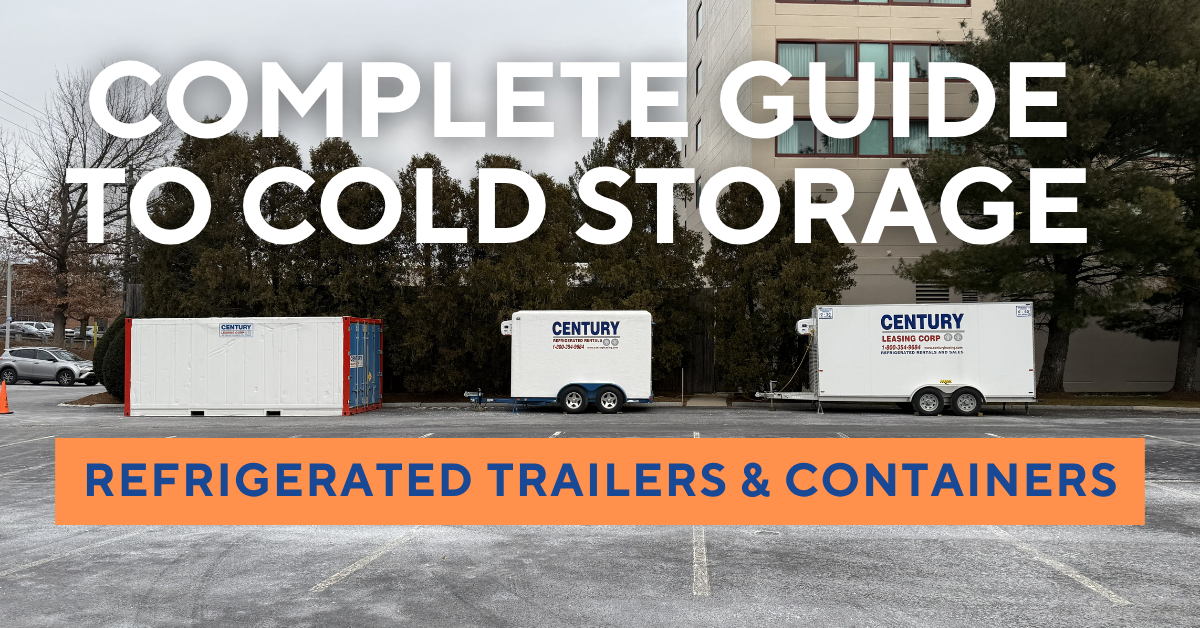
Complete Guide to Cold Storage: Refrigerated Trailers & Containers
Refrigerated containers are essential for on-site storage and transporting temperature-sensitive products. Designed to maintain consistent temperatures, they help protect food, beverages, pharmaceuticals, and other perishable products.
While many facilities use permanent walk-in refrigeration systems, portable options such as mobile refrigerated trailers and refrigerated storage containers provide temporary, flexible cold storage when businesses need additional space.
Temporary cold storage is commonly used during equipment breakdowns, seasonal demand spikes, large events, and facility maintenance. These portable refrigeration units can be delivered directly to a location and quickly set up to provide reliable on-site cooling or freezing.
This guide explains what refrigerated containers are, how they work, and how businesses use them for temporary and on-site cold storage.
Refrigerated containers are portable, temperature-controlled storage units used to keep food, beverages, and other perishable products at safe temperatures. These units can function as either a cooler or a freezer and are commonly delivered on-site when businesses need temporary or additional cold storage.
Jump to a Section
- ➤ What Is a Refrigerated Container?
- ➤ Types and Sizes of Refrigerated Containers
- ➤ Temperature Range & Environmental Control
- ➤ How Refrigerated Containers and Trailers Work
- ➤ Benefits of Portable Cold Storage
- ➤ Industries and Common Uses for Refrigerated Containers
- ➤ Power Requirements for Portable Cold Storage
- ➤ Renting vs Buying Cold Storage
- ➤ Why Businesses Choose Century Leasing
- ➤ Conclusion
What Is a Refrigerated Container?
A refrigerated container—often called a “reefer container”—looks similar to a standard storage container from the outside, but it’s equipped with a built-in cooling system that maintains a controlled internal temperature. Instead of storing equipment or materials like a typical storage container, reefer containers are designed to keep temperature-sensitive products safely chilled or frozen.
Depending on the unit, our refrigerated containers can maintain temperatures ranging from about -20°F to 80°F, allowing them to function as either a cooler or freezer.
Businesses often rent reefer containers for on-site cold storage, using them to store food, beverages, seafood, produce, and other temperature-sensitive products when additional refrigeration space is needed.
Because they are delivered directly to a location and placed at ground level, refrigerated containers function much like a temporary walk-in cooler or freezer, providing reliable cold storage without permanent construction.
What is a refrigerated container used for?
Refrigerated containers are used to store temperature-sensitive products such as food, beverages, and pharmaceuticals. Businesses commonly use them for temporary cold storage during equipment breakdowns, seasonal demand increases, events, and facility maintenance.
Types and Sizes of Refrigerated Containers
Businesses use several types of portable refrigeration depending on storage needs, available space, and how long the unit will be in use.
Mobile Refrigerated Trailers
Mobile refrigerated trailers provide portable walk-in cooler or freezer storage that can be delivered directly to a business location.
Common sizes include:
- 7′ × 12′ refrigerated trailers
- 7′ × 16′ refrigerated trailers
Best suited for:
- Emergency refrigeration
- Events and catering
- Locations with limited space
- Short-term storage needs
Because they are easy to position and require minimal setup, mobile refrigerated trailers are often used when businesses need quick, flexible cold storage.
Note: Many modern units operate on standard 110-volt power, allowing them to plug into a typical electrical outlet without requiring generators or specialized setup.
Refrigerated Storage Containers
Refrigerated containers are ground-level walk-in units designed for larger and longer-term cold storage needs.
Common sizes include:
- 10 ft refrigerated container – compact walk-in refrigeration for tight spaces
- 20 ft refrigerated container – medium-capacity storage for restaurants and commercial kitchens
- 40 ft refrigerated container – high-capacity storage for large-scale operations
Common uses include:
- Commercial kitchen overflow
- Food distribution and storage
- Event refrigeration
- Seafood and food production
Because they sit at ground level, refrigerated containers allow easy access for staff moving inventory in and out.
Note: Our 10 ft and 20 ft units can also operate on standard 110-volt power, making them easier to deploy without high-voltage connections.
Dock-Level Refrigerated Trailers
Dock-level refrigerated trailers provide high-capacity cold storage connected directly to loading docks.
Commonly used by:
- Food distributors
- Warehouses
- Grocery distribution centers
These units are typically used in industrial environments where dock access is available.
Temperature Range & Environmental Control
Cold storage equipment is designed to maintain precise temperatures depending on the products being stored. Maintaining proper temperature control is essential for food safety, as outlined in the FDA’s safe food handling guidelines.
Typical temperature ranges include:
- Cooler storage: 34°F – 40°F
- Freezer storage: 0°F or below
- Deep frozen storage: as low as -30°F in larger refrigerated containers
Many modern portable cold storage units offer adjustable temperature settings, allowing the same equipment to function as either a cooler or freezer.
This versatility makes temporary cold storage useful for industries that store a variety of products.
How Refrigerated Containers and Trailers Work
Refrigerated containers and trailers operate using a mechanical refrigeration system similar to a traditional walk-in cooler or freezer. Their purpose is simple: remove heat from the interior and maintain a consistent, controlled temperature.
These systems rely on several key components:
- Compressor
- Condenser
- Evaporator
- Insulated storage chamber
Working together, these components continuously circulate refrigerant to pull heat out of the storage space and release it outside. This process keeps the interior temperature stable, even when outdoor conditions change.
High-performance insulation, such as R33 insulation, also plays an important role by helping maintain consistent temperatures while improving energy efficiency.
Most portable refrigeration units require an external power source to operate. Many modern mobile refrigerated trailers—and certain refrigerated containers—can run on standard 110-volt power, allowing them to plug into a typical electrical outlet without the need for generators or specialized electrical setup.
Benefits of Portable Cold Storage
Portable cold storage offers several advantages compared to permanent refrigeration construction.
Fast Deployment
Temporary cold storage units can often be delivered and operational quickly, helping businesses respond to unexpected refrigeration needs.
Flexible Temperature Control
Many units can operate as either a cooler or freezer, allowing businesses to store a wide range of products.
Scalable Storage
Businesses can add additional refrigeration units during peak seasons or large events.
Lower Infrastructure Costs
Portable refrigeration eliminates the need for expensive construction or facility upgrades.
Ideal for Emergency Situations
Temporary refrigeration can help protect valuable inventory during:
- Walk-in cooler breakdowns
- Freezer failures
- Equipment maintenance
- Delayed refrigeration installations
Industries and Common Uses for Refrigerated Containers
Many businesses rely on refrigerated containers and portable cold storage to protect temperature-sensitive inventory. These units are often used when existing refrigeration reaches capacity, equipment fails, planned maintenance or renovations, or when additional storage is needed for seasonal demand.
Industries that commonly use refrigerated containers include:
- Restaurants and quick-service restaurants
- Catering companies and event venues
- Hotels and hospitality operations
- Grocery stores and supermarkets
- Healthcare facilities and laboratories
- Schools and universities
- Food distributors
- Event planners and festivals
- Seafood processors and food producers
Portable cold storage allows these businesses to maintain safe storage temperatures while continuing normal operations.
Emergency Refrigeration
Walk-in cooler or freezer failures can occur without warning and may risk losing thousands of dollars in inventory.
Temporary refrigeration, such as mobile refrigerated trailers or refrigerated containers, allows businesses to safely store products while repairs or equipment replacements are completed.
This helps businesses:
- Protect inventory from temperature exposure
- Maintain safe food storage temperatures
- Continue operations during equipment repairs
Seasonal Inventory Overflow
Many businesses experience predictable increases in inventory during busy seasons. Social media can also create an upredictable viral uptick for certain menu items requiring businesses to order additional inventory to satisfy demand temporarily.
Examples include:
- Restaurants, bakeries and specialty markets preparing for holiday service
- Seafood markets during peak fishing seasons
- Grocery stores increasing stock before major holidays
Portable cold storage provides additional refrigeration capacity without requiring permanent facility expansion.
Festivals, Weddings, and Large Events
Large events often require temporary refrigeration for food preparation, beverages, and catering operations.
Refrigerated trailers and containers are commonly used for:
- Music festivals
- Food festivals
- Weddings and catering events
- Sporting events and fan zones
- Corporate events and conventions
Temporary cold storage helps event vendors manage high-volume service while maintaining food safety standards. Golf courses and country clubs are another common setting for large events, where additional refrigeration is often needed to support food and beverage service—especially during tournaments and weddings. Learn how portable refrigeration is used in these environments in our guide to portable refrigeration for events at golf courses.
Schools and Institutional Food Service
Schools, universities, hospitals, and other institutional kitchens depend on reliable refrigeration for daily meal service.
Temporary cold storage may be used during:
- Walk-in cooler replacements
- Kitchen renovations
- Planned refrigeration maintenance
- Large food deliveries
Portable refrigeration helps facilities maintain safe food storage with minimal disruption to operations.
Grocery Stores and Food Distribution
Grocery stores and food distributors manage large quantities of perishable products that must remain within strict temperature ranges.
Temporary refrigeration is often used when:
- Equipment failures occur
- Inventory levels increase during peak seasons
- Stores upgrade refrigeration systems
Portable cold storage helps protect valuable inventory while allowing businesses to continue serving customers.
Power Requirements for Portable Cold Storage
Most portable refrigeration systems require an external power source to operate.
Some refrigeration units require high-voltage electrical connections. However, certain mobile refrigerated trailers and smaller refrigerated containers are designed to operate on standard 110-volt power, allowing them to plug into a typical electrical outlet.
This simplifies installation and allows businesses to utilize cold storage quickly without a complex electrical setup.
Renting vs Buying Cold Storage
Businesses choose between renting or purchasing refrigeration equipment depending on their operational needs.
Renting
Renting is ideal for:
- Emergency refrigeration
- Seasonal demand spikes
- Temporary events
- Planned maintenance
Buying
Purchasing cold storage equipment may make sense for businesses that require long-term refrigeration capacity or want to add permanent storage assets.
Why Businesses Choose Century Leasing
Choosing the right cold storage solution often comes down to speed, simplicity, and reliability—especially when refrigeration is needed on short notice.
Century Leasing has been helping businesses across New England meet those needs since 1969 by providing practical, easy-to-deploy cold storage solutions for a wide range of industries.
Businesses choose Century Leasing for:
- Fast delivery when it matters most, including emergency refrigeration situations
- Portable, on-site cold storage that can be set up quickly without permanent installation
- Flexible solutions for everything from short-term events to long-term storage needs
- Equipment designed for real-world use, whether it’s a restaurant, event venue, or commercial facility
Many of Century Leasing’s mobile refrigerated trailers and smaller refrigerated containers operate on standard 110-volt power, making them easy to plug in and use without generators or complex electrical setup.
From walk-in cooler breakdowns to seasonal overflow and large events, Century Leasing helps businesses keep operations running with reliable, on-site refrigeration when it’s needed most.
Key Takeaways
- Refrigerated containers provide portable, on-site cold storage without permanent construction
- They can function as either a cooler or freezer depending on temperature settings
- Common sizes include 10 ft, 20 ft, and 40 ft units
- Mobile refrigerated trailers are ideal for short-term or emergency use
- Many units operate on standard 110-volt power for easy setup
Conclusion
Refrigerated containers and portable cold storage solutions give businesses the flexibility to safely store temperature-sensitive products without the need for permanent infrastructure. Whether it’s a short-term need during an equipment breakdown or additional storage for seasonal demand, these solutions make it easier to maintain product quality and keep operations running smoothly.
By understanding the different types of cold storage, available sizes, and real-world applications, businesses can choose a solution that fits their space, timeline, and operational needs.
When the need for reliable, on-site refrigeration comes up—whether planned or unexpected—having the right solution in place can make all the difference. Working with an experienced provider can help ensure you get the right equipment quickly and without unnecessary complexity.
Need temporary cold storage? Call Century Leasing today at 1-800-354-9684 or explore available mobile refrigerated trailers and refrigerated containers to find the right solution for your needs.